
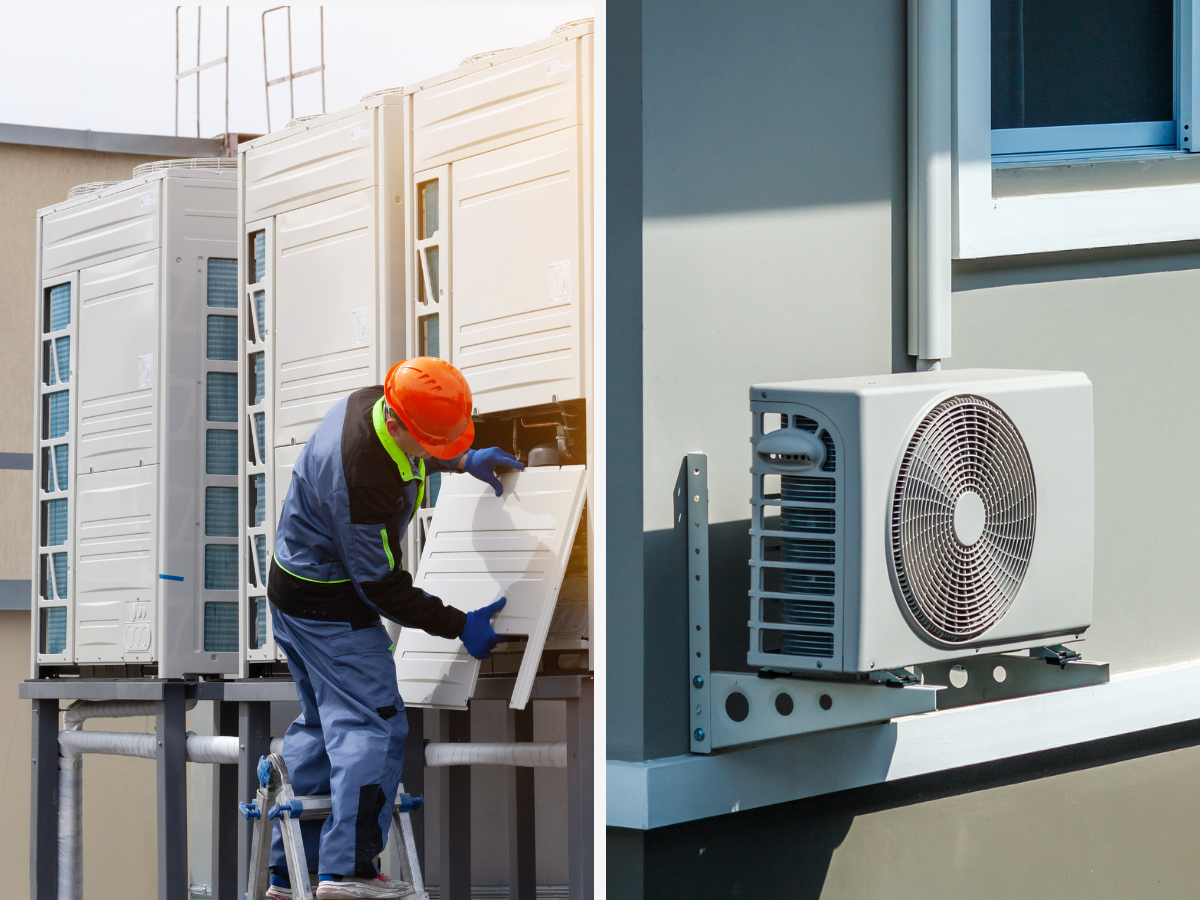
Commercial AC vs residential AC
If you’re trying to figure out whether your building needs a commercial or residential AC system, it comes down to size, power, and complexity. Commercial AC units are built to cool much larger spaces with more people, while residential systems are designed for the comfort of a single household. Choosing the wrong type can lead to poor cooling, high energy bills, and frequent breakdowns.
Key Points:
- Commercial AC units are significantly larger and more powerful than residential systems.
- Residential units typically cost $3,000 to $15,000 installed, while commercial systems can range from $6,000 to well over $15,000.
- Commercial systems are usually installed on rooftops; residential units sit beside or behind the home.
- Both system types last 15 to 20+ years with proper maintenance, but commercial units face more wear due to heavier use.
How Are Commercial and Residential AC Units Different in Size?
The average home in the U.S. is under 2,700 square feet, while the average commercial building is closer to 19,000 square feet. Air Tech of Humble That gap in square footage is the main reason commercial systems are built so much bigger. They need far more cooling capacity to keep a large space comfortable.
Commercial HVAC systems are modular in design, meaning all the parts are housed together for easier maintenance and upgrades. Service Champions Residential units, on the other hand, are standalone systems with indoor and outdoor components split between different areas of your home. You can’t easily expand or modify a residential unit the way you can with a commercial setup.
The physical footprint matters, too. Residential systems are typically single, standalone units located in the backyard or against the side of a house, while commercial systems usually sit on the roof of a building. The Severn Group Rooftop placement keeps noise away from employees and customers, and it frees up valuable ground-level space for your business. If you’re weighing options for a new commercial AC installation, system size is one of the first things your HVAC technician will evaluate.
What Does a Commercial AC System Cost Compared to Residential?
Residential AC unit installation costs generally fall between $3,000 and $15,000, with the average sitting around $8,500. Peak Heating Cooling The final price depends on your home’s size, the unit’s efficiency rating, and how complex the installation is.
Commercial systems are a different ballpark. A 3-ton commercial air conditioner runs between $6,000 and $11,000 installed, while a 5-ton unit can cost $10,000 to $15,000. The Furnace Out Larger buildings with multi-zone setups or rooftop installations can push costs much higher.
Here’s a quick cost comparison:
- Residential AC installation: $3,000 to $15,000
- Small commercial AC (3-ton): $6,000 to $11,000
- Mid-size commercial AC (5-ton): $10,000 to $15,000
- Residential maintenance visit: $100 to $300
- Commercial maintenance visit: $200 to $600
Installation labor is often the hidden cost driver for commercial systems. Installation can account for 30 to 50 percent of total commercial AC costs The Furnace Out because of specialized technicians, ductwork modifications, and rooftop access requirements. If you’re curious about what to expect for your building, take a look at our breakdown of commercial AC unit costs.
How Do Commercial AC Units Work Differently Than Residential?
Both commercial and residential systems use the same basic refrigeration cycle to cool air. But the components and complexity are where they split apart.
Commercial systems use centrifugal or screw-type compressors, while residential units typically rely on piston-type or scroll-type compressors. SkillCat Commercial units also use additional components like cooling towers, economizers, and water pumps that you won’t find in a home system. These parts help manage the much larger cooling load of a commercial building.
Commercial systems often include zoning capabilities to control temperatures in different areas of the building, along with advanced air filtration designed to handle large volumes of air. Acmeac A residential system generally uses a single thermostat for the whole house. If your business has rooms with different cooling needs, like a server room versus an open office, zoning is a feature you’ll want. Learn more about how commercial AC units work in our detailed guide.
How Long Does Each Type of System Last?
With proper maintenance and care, you can expect 15 to 20 years from a residential AC system. Carrier Commercial HVAC systems typically last between 15 and 25 years, though well-maintained components like chillers can make it past 30 years. Calcasieu Mechanical
That said, commercial units often face more stress because they run longer hours and serve more people. Residential AC units tend to last longer than commercial units because they aren’t used as frequently and aren’t subjected to the same level of wear. The Cooling Co
Here are factors that shorten the lifespan of either system:
- Skipping annual or seasonal maintenance
- Incorrect sizing during installation
- Running the system at very low temperatures constantly
- Ignoring minor repairs until they become major failures
- Exposure to harsh weather or coastal salt air
Scheduling regular maintenance is the single best way to extend the life of your system, whether it’s commercial or residential. For commercial properties, maintenance should happen more frequently than once a year due to heavier use. Check out our guide on regular HVAC maintenance to see what a proper service visit includes.
Need Help Choosing the Right AC System for Your Building?
Picking between a commercial and residential AC system isn’t just about building size. It’s about occupancy, cooling demands, energy efficiency goals, and long-term cost. The wrong system will cost you more in repairs, energy bills, and comfort complaints.
If you own a commercial property in Texas and need expert guidance, KRS HVAC specializes in both commercial AC services and residential systems. Reach out to our team for a free assessment, and we’ll help you find the right fit for your space and budget.